

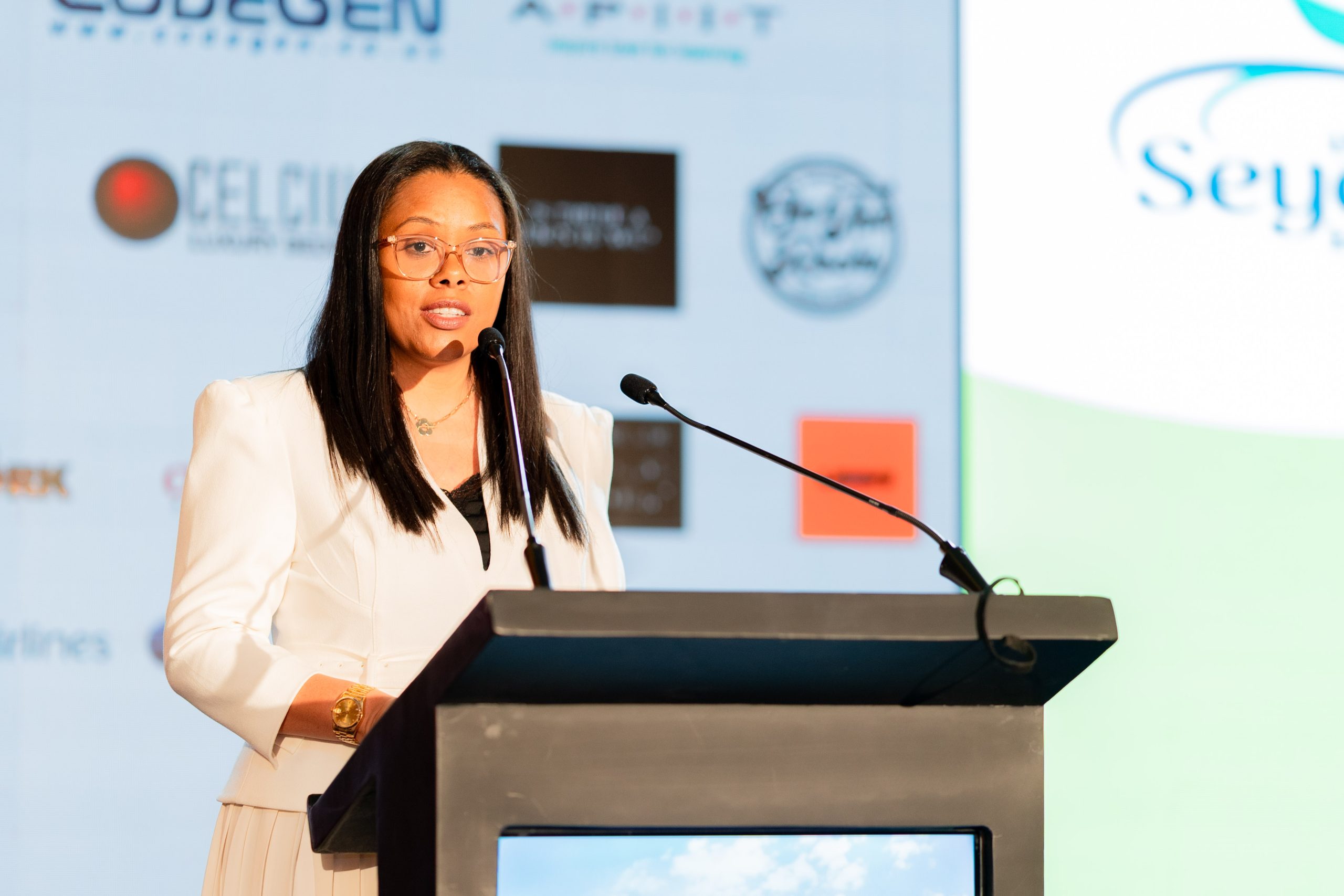
The Principal Secretary for Tourism, Mrs Sherin Francis, represented Seychelles at the International Hospitality Leaders’ Conference – Vision 2030, held on 29 September 2026 at the Cinnamon Grand in Colombo, Sri Lanka.
Organised by the Institute of Hospitality – Sri Lanka Chapter, the conference brought together senior hospitality executives, tourism leaders, investors and industry decision-makers to examine the future performance of the hospitality sector towards 2030. Discussions covered leadership, human capital, destination strategy, technology, artificial intelligence, customer experience and changing consumer trends.
Mrs Francis was invited as an expert speaker and panellist, contributing Seychelles’ experience in pursuing sustainable economic value while protecting the natural and cultural assets on which the destination’s competitiveness depends.
In her expert session, “Building a Premium Tourism Destination: Lessons from Seychelles in Creating Sustainable Value Beyond Visitor Numbers,” Mrs Francis outlined Seychelles’ approach to tourism development and argued that premium tourism should not be understood simply in terms of luxury hotels or high prices.
“A premium destination is one that understands what makes it valuable, attracts visitors who appreciate that value, and protects the very things that make people want to come,” she told delegates.
The Principal Secretary highlighted Seychelles’ longstanding high-value, low-impact approach, explaining that tourism performance cannot be measured by visitor arrivals alone. Destinations must also consider visitor expenditure, length of stay, local economic retention, employment, benefits to local businesses and communities, and the pressures tourism growth places on infrastructure and the environment.
In 2025, Seychelles welcomed 398,841 visitors, supported by 846 registered and licensed tourism accommodation establishments providing 8,408 rooms. Tourism earnings reached approximately US$1.196 billion, equivalent to around US$3,000 in tourism receipts per visitor. Visitors stayed an average of 9.3 nights, with average daily expenditure of US$322.
Mrs Francis also shared Seychelles’ experience in using evidence to guide tourism development, including tourism master planning, carrying-capacity studies, visitor expenditure research, workforce studies and sustainability frameworks. She noted that such evidence had informed decisions on accommodation development, including restrictions and moratoria in areas where additional growth could place excessive pressure on infrastructure, communities and the environment.
Another central message of the intervention was that the destination itself is the tourism product. Mrs Francis highlighted initiatives including Sustainable Seychelles, the Star Rating system, Seychelles Secrets and Lospitalite – Lafyerte Sesel as examples of efforts to strengthen sustainability, quality, service and national pride across the visitor economy.
Addressing hotel leaders directly, she emphasised that hotels have a role extending beyond their individual properties. Their choices concerning local procurement, cuisine, employment, environmental practices, community experiences and data sharing can influence how much tourism value remains within a destination.
“The question is not only, ‘How do I make my hotel more premium?’ The bigger question is, ‘How do I help make my destination more valuable?’” Mrs Francis said.
Reflecting on the Sri Lankan context, Mrs Francis recognised the country’s significant tourism strengths, including its cultural heritage, wildlife, tea country, wellness, gastronomy, beaches and geographic diversity. She stressed that Seychelles’ model should not be replicated wholesale, but that the strategic questions around visitor value, market selection, sustainability and local economic benefits are transferable between destinations.
She also acknowledged that Seychelles continues to face its own challenges, including the impact of geopolitical disruptions on visitor arrivals, dependence on European source markets, air connectivity constraints and the need to continuously strengthen tourism data and market-intelligence capacity.
“We are still learning, adjusting and sometimes correcting course,” she said, noting that destinations are confronting common questions around resilience, connectivity, market concentration, skills, investment and managing growth without losing the attributes that make them distinctive.
Mrs Francis subsequently participated in the conference’s “Strategy and Story” panel alongside Mr Oliver Martin, Senior Director at Skift Advisory, and Mr Abdulla Ghiyas Riyaz, Chairperson of Visit Maldives Corporation. Moderated by Mr Dileep Mudadeniya, the discussion examined the strategy and story for Sri Lankan tourism towards 2030 and the role of industry leadership.
Concluding her intervention, Mrs Francis emphasised that the future competitiveness of destinations will increasingly depend on the quality and sustainability of the value tourism creates.
“Premium is not a price point. It is a choice — a choice about the visitor you attract, the product you develop, the markets you pursue, how you grow, what you protect, and ultimately, how much value tourism leaves behind.”